Sod Calculator: Pallets for 1,000 sq ft to 1 Acre
Last updated: October 3, 2026
Calculate sod pallets for a yard from about 1,000 square feet up to an acre, with 5% waste built in.
Pick a yard shape (or enter total square footage), set pallet size, and get pallets needed plus optional cost.
Embed this calculator on your site
Yard area
Sod type
How the sod order is calculated
The order starts with the lawn area in square feet, adds a fixed 5 percent for cuts and waste, then rounds up to whole pallets. Area depends on the shape you pick. A rectangle is length times width. A square is the side multiplied by itself. A circle is π times the radius squared, and the radius is half the distance across the circle. If you already know the square footage, choose "I know the square footage" and type that number. The tool does not add shapes together, so a yard made of a rectangle plus a circle should be measured in pieces and entered as one total.
Waste is always 5 percent: square feet with waste = area × 1.05. Pallets needed = that waste-adjusted area divided by the square feet on one pallet, rounded up to the next whole pallet. You cannot order a fraction of a pallet here, and the page will not round down. If the pallet-size field is empty, the page uses 450 square feet, which is only a starting number. Replace it with the coverage your supplier prints on the quote. Optional cost is the pallet count times the price per pallet. Leave the price blank and the cost line stays "N/A." A price of zero shows $0.
The area and waste figures on the result panel are rounded to the nearest square foot for display. The pallet count uses the unrounded waste area, then rounds up. A job that lands just over a pallet boundary can jump a full pallet. That is the point of rounding up: running short on delivery day is harder to fix than returning an unused roll if the farm allows it.
Pallets from 1,000 square feet to 1 acre
The form does not store an acre. An acre is 43,560 square feet, so a quarter acre is 10,890 and a half acre is 21,780. Type that square footage into "I know the square footage." The table uses the page's other two constants: waste is area × 1.05, and an empty or untouched pallet field is 450 square feet. Pallets are that waste-adjusted area divided by 450, rounded up. Replace 450 with the farm's number and this table no longer applies.
| Area you type | Square feet | With 5% waste | Divided by 450 | Pallets to order |
|---|---|---|---|---|
| 1,000 sq ft | 1,000 | 1,050 | 2.333… | 3 |
| 2,000 sq ft | 2,000 | 2,100 | 4.667… | 5 |
| 5,000 sq ft | 5,000 | 5,250 | 11.667… | 12 |
| 1/4 acre | 10,890 | 11,435 | 25.41 | 26 |
| 1/2 acre | 21,780 | 22,869 | 50.82 | 51 |
| 1 acre | 43,560 | 45,738 | 101.64 | 102 |
Three pallets at 450 square feet cover 1,350 square feet. A 1,000 square foot job only needs 1,050 after waste, so the round-up leaves 300 square feet of coverage you may not lay. An acre is tighter: 102 pallets cover 45,900 square feet against 45,738 needed. The same round-up rule produces a large spare on the small job and a thin spare on the acre. If the quote says the pallet is not 450, ignore the table and use the field.
How I laid sod at my own house
I laid a strip of new sod along my front sidewalk and dug a trench for new irrigation. These photos are from that job at my house. Here is what the work looked like, from the pallets in the driveway through the sidewalk trench to the soil prep and the finished strip.
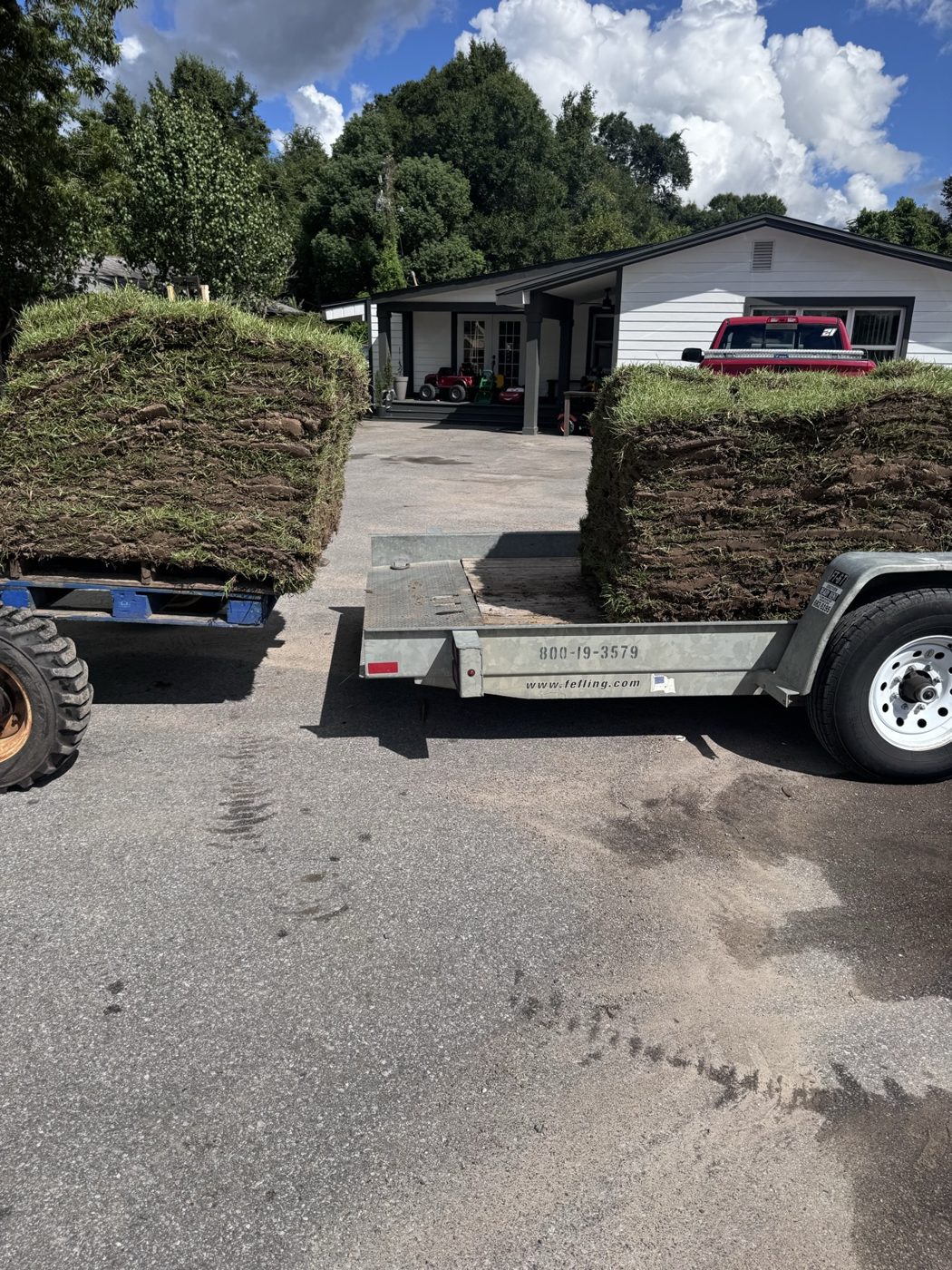
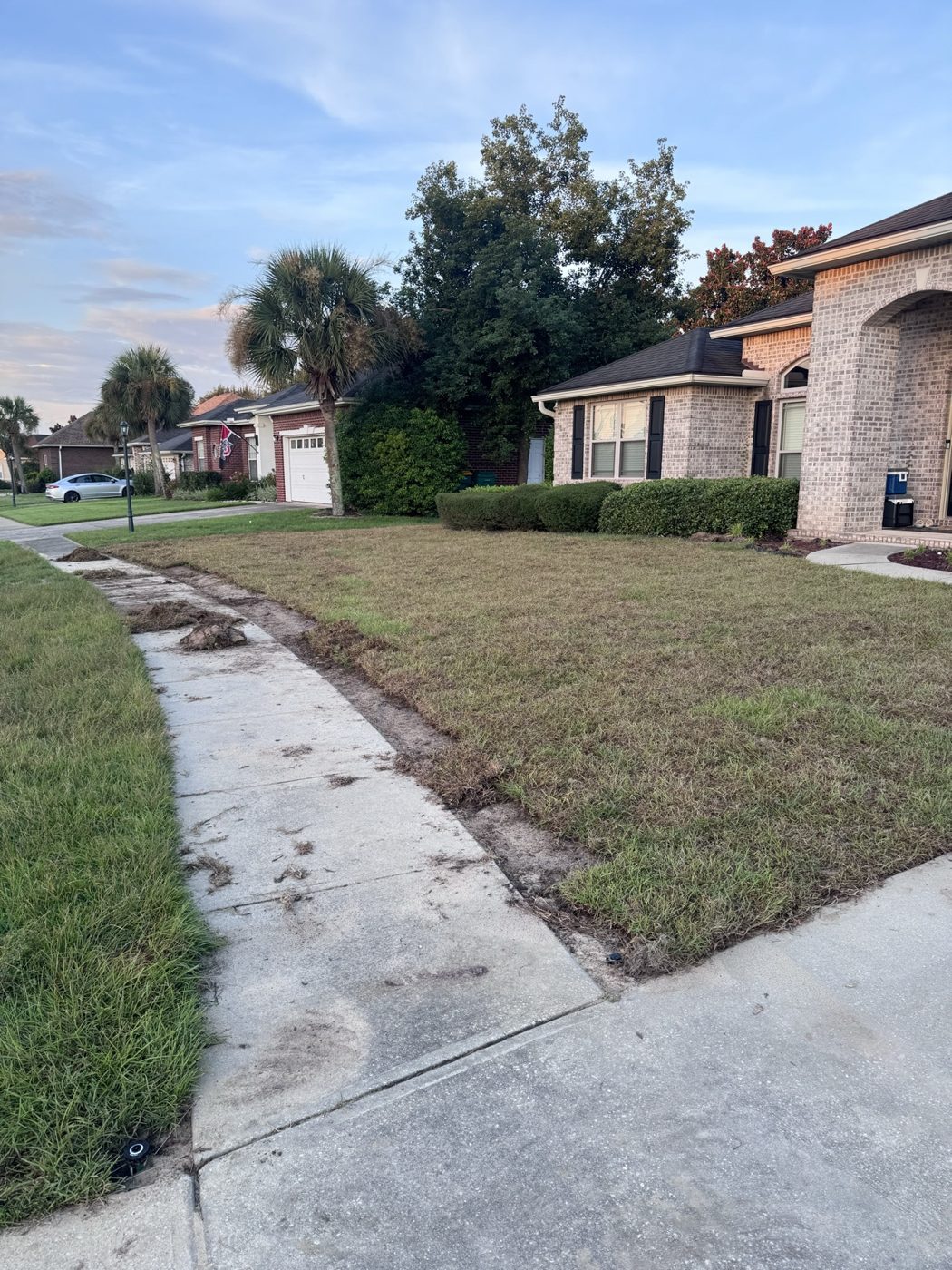
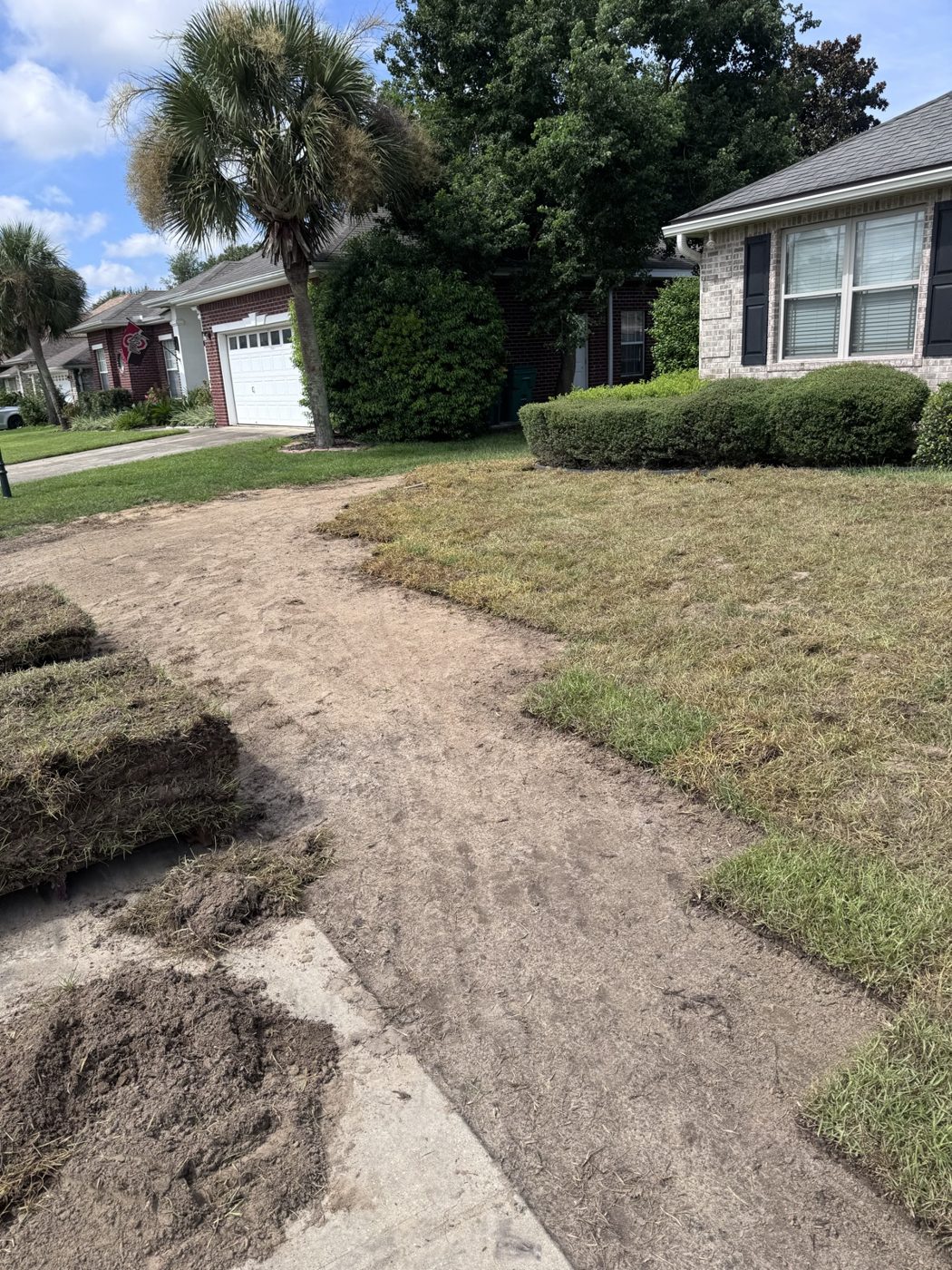
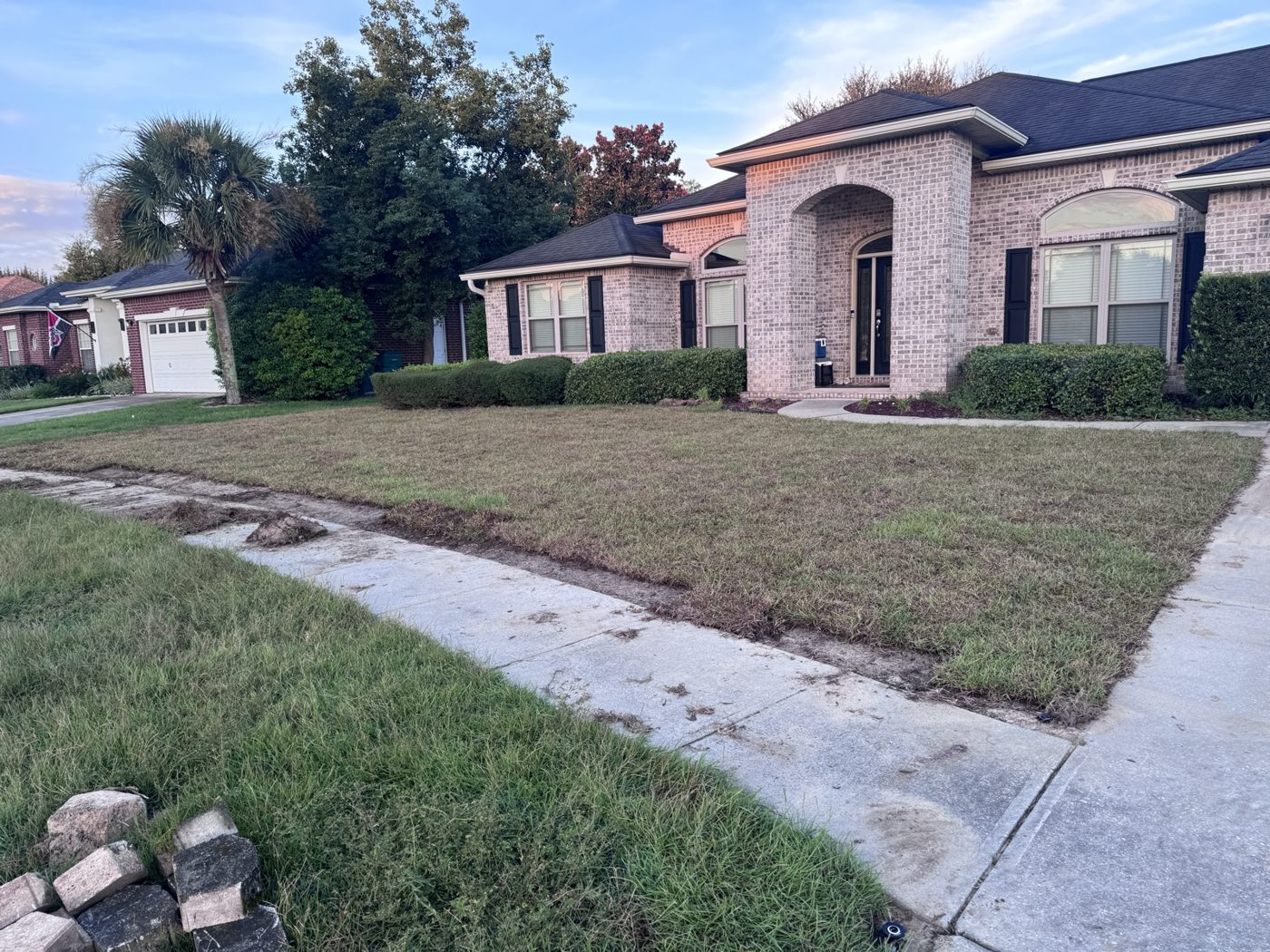
Pallets still round up to the next whole pallet, and the square feet your supplier prints for one pallet is the coverage that matters: this page starts at 450 square feet per pallet and already includes the 5 percent waste.
Worked examples
Example 1: A rectangular lawn at the default pallet size
Length 40 feet, width 30 feet. Area = 40 × 30 = 1,200 square feet. With the built-in 5 percent, the order quantity is 1,260 square feet. At 450 square feet per pallet, 1,260 ÷ 450 = 2.8, which rounds up to 3 pallets. At $200 per pallet the estimated sod cost is $600. That $600 is sod only. Delivery, soil, and labor are separate.
Example 2: A circular area
A round island with radius 15 feet has area π × 15², about 707 square feet on the panel. With waste that is about 742 square feet. At 450 square feet per pallet, 742 ÷ 450 is under 2, so the order is 2 pallets. Enter the radius, the distance from the center to the edge. Entering the full width (the diameter) makes the area four times too large.
Example 3: A supplier who sells 500-square-foot pallets
You measured 2,000 square feet and the farm's pallet covers 500. Choose custom area, type 2000, and set square feet per pallet to 500. Waste-adjusted area is 2,100. 2,100 ÷ 500 = 4.2, which rounds up to 5 pallets. Comparing that quote with a farm that sells 450-square-foot pallets at a different price is a unit-price question, not a pallet-count question. Divide each farm's pallet price by its coverage, or use the Unit Price Calculator so both prices are per square foot.
When to use this
Use it the day you call a sod farm or a landscape yard, after you have a tape measurement and before you commit to a delivery window. It is the right tool for a full lawn replacement, a patch where a dog run wore through, or a new construction yard that is still bare soil. It is also the right check when a contractor's pallet count looks high or low: put the same dimensions in and see whether the difference is the waste cushion, the pallet size, or the area itself.
Measure only the ground that will receive sod. Driveways, patios, house footprint, and planting beds are not part of the area. For an L-shaped yard, break it into rectangles, add the square feet, and use the custom area field. The Square Footage Calculator is built for that addition. If part of the project is a concrete walk or a patio slab, that volume belongs in the Concrete Volume Calculator, which speaks cubic yards, not square feet of turf.
Pallet size is a local fact
Sod is sold by the pallet, sometimes called a skid. Coverage is not a national standard. A pallet might be small slabs, a stack of larger pieces, or big rolls, and the square feet printed on the invoice is the number that matters. The 450 in the form is a common figure and a convenient default, not a promise that your farm sells 450. Ask for square feet per pallet and the price per pallet in the same breath. A "cheaper" pallet that covers less ground can cost more per square foot.
Rolls and slabs also install differently. Big rolls need a machine or a crew. Small slabs are what most weekend jobs can carry. This page counts square feet either way. It does not tell you whether the pieces will be light enough to move by hand.
Cuts, timing, and what the price leaves out
The 5 percent exists because edges, curves, and obstacles eat pieces. A straight rectangle with few obstacles often wastes less than 5 percent. A yard broken up by beds and tree wells wastes more, which is why the custom-area trick above exists. End pieces that are too narrow to lay are waste even when the math looked exact.
Sod is perishable. Schedule delivery for the day you will lay it, preferably the morning, and have the soil graded and damp before the truck arrives. Pallets that sit, especially in heat, decline quickly. A common working window is the day of delivery, and growers often say a pallet left stacked in the sun is in trouble within a day or two. Water each section as it goes down rather than waiting until the whole yard is finished. This page does not price that water, the soil amendments, the rental of a roller, or the labor. The cost line is pallets times price. Get the delivery fee and any fuel surcharge from the farm and add them yourself.
Soil prep decides whether the math was worth doing. Sod laid on compacted fill, without contact with soil, fails even when the pallet count was perfect. Grading, removing old turf, and loosening the surface are part of the job and are outside this calculator. If you are also painting the fence or the house the same weekend, coverage for that work is the Paint Coverage Calculator. Lumber for edging is the Board Feet Calculator.
Common mistakes
- Mixing feet and inches as one decimal. A side of 30 feet 6 inches is 30.5 feet. Typing 30.6 treats the 6 as six tenths of a foot, which is a little over 7 inches, and the area is wrong before waste is applied.
- Using diameter in the radius field. A circle that is 30 feet across has a radius of 15. The area of a 30-foot radius is four times the area of a 15-foot radius.
- Including the house, the drive, and the beds. Measure the grass, or the bare soil that will become grass. Subtract the areas that stay hardscape.
- Adding 5 percent yourself. The page already multiplies by 1.05. Type the measured area unless you are deliberately aiming for a larger cushion using the method in example 4.
- Leaving 450 when the quote says something else. The pallet count scales directly with that field. A wrong coverage number is a wrong order.
- Comparing pallet prices across different coverages. Convert both quotes to dollars per square foot before you decide which farm is cheaper.
- Ordering from an old measurement after you changed the beds. A new tree ring or a widened walk changes the area. Remeasure the pieces and add them again.
Limitations
One area at a time, one pallet size, and a waste factor locked at 5 percent. No slope adjustment: a steep bank has more surface than the flat map of its footprint, and this page uses the flat dimensions you type. No distinction between sun and shade varieties, no price for soil or compost, and no tax or delivery. The dollar result rounds to the nearest dollar. The tool does not know your farm's return policy on unopened pallets, which is the practical safety valve when rounding up leaves you long. Confirm coverage, freshness, and the delivery window with the supplier before you pay.
FAQ
Why did a small change in length add a whole pallet?
Pallets round up. If the waste-adjusted area is 1,351 and the pallet is 450 square feet, you need 4 pallets (1,800 square feet of coverage) even though 3 pallets would cover 1,350. One extra foot of length on a wide yard can cross that line. The panel shows the waste-adjusted square feet so you can see how close you are.
Can I turn the 5 percent cushion into 10 percent?
Not with a setting. The page always multiplies by 1.05. To land near a 10 percent cushion, enter a custom area of about measured area × 1.10 ÷ 1.05, which is roughly 4.8 percent above the measurement. The built-in 5 percent then brings the order to about 10 percent over the lawn you measured. Do not also add 5 percent by hand or you will count the cushion twice.
Does the price include delivery?
No. Cost is pallet count times the price you type. Add the farm's delivery fee and tax yourself.
The plan is in meters. What do I type?
Convert to feet with the Length Converter first. The fields on this page are feet and square feet.
Related calculators
- Square Footage Calculator for adding irregular sections before you order
- Unit Price Calculator for comparing farms with different pallet sizes
- Length Converter when the plan is in meters
- Concrete Volume Calculator for the walk or patio next to the lawn
- Paint Coverage Calculator
- Board Feet Calculator for edging and lumber